Eyes in the Sky: Using Bird Action to Locate Trophy Bass During the Fall Run
November 26, 2025
The air is crisp, the water temperatures are dropping, and the coastline is buzzing with anticipation. It’s the Fall Run—that magical window when massive schools of striped bass migrate south, feeding aggressively to bulk up for the winter.
For many anglers, the biggest challenge isn't catching the fish; it’s finding them in the vast expanse of open water. While modern electronics are incredible tools, the best fish finder you have doesn't run on batteries. To find the biggest bass of the season, you need to look up.
Here is how to read bird action to locate the schools of bait that trophy bass can't resist.
Why Birds Equal Bass
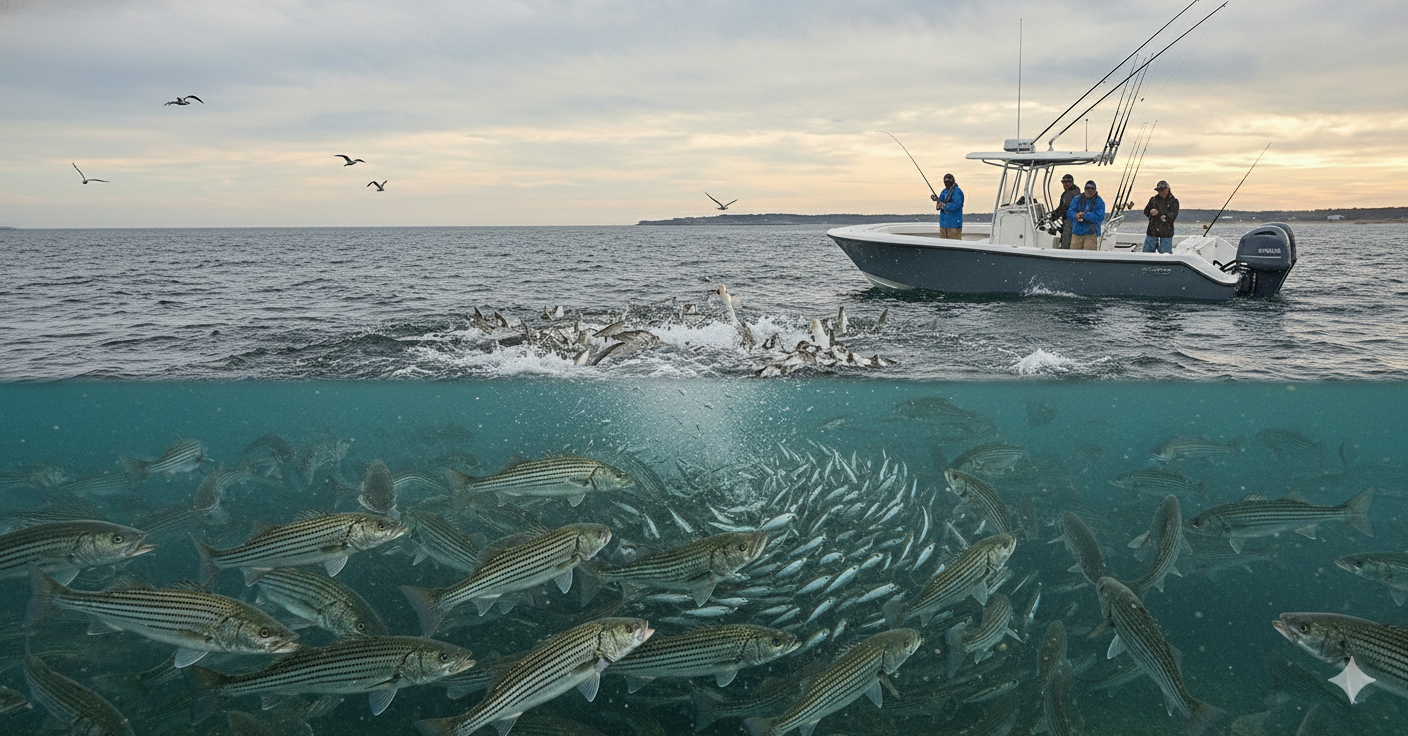
The connection between birds and bass is driven by a chaotic food chain event often called a "blitz."
When predatory fish (like Striped Bass or Bluefish) locate a school of baitfish—menhaden, mullet, anchovies, or sand eels—they drive the school toward the surface to trap them against the "roof" of the water column. This eliminates the bait's ability to dive deep to escape.
Once the bait breaks the surface, they become easy targets for seabirds. When you see birds working the water, you are witnessing the top half of a pincer movement. The birds are the signal; the bass are the engine driving the action below.
Not All Flocks Are Equal
Simply seeing a bird doesn't guarantee a 40-inch bass. You need to interpret how the birds are behaving to understand what is happening beneath the surface.
1. The High-Diving Gannet (The Trophy Hunter's Best Friend)
If you see Northern Gannets folding their wings and plummeting from great heights into the water, pay attention.
-
What it means: Gannets are large birds that require large meals. They are usually diving on full-sized Menhaden (Bunker) or Herring.
-
The Bass Connection: Big bait equals big bass. If gannets are dive-bombing, there are likely heavy "cows" pushing large baitfish deep in the water column.
2. Terns and Gulls "Picking"
You will often see smaller birds hovering close to the water, dipping their beaks in quickly to snatch something.
-
What it means: This usually indicates "rain bait" (bay anchovies) or peanut bunker.
-
The Bass Connection: This surface frenzied action often attracts schoolie-sized bass or bluefish. However, never rule out a monster lurking beneath the schoolie frenzy, waiting for scraps.
3. The "Sitting" Flock
Sometimes you will see a massive raft of birds just floating on the water, looking bored.
-
What it means: The feed just ended, or the bait has been pushed deep, and the birds are waiting for the bass to drive it back up.
-
The Bass Connection: Do not drive past these birds! Use your sonar. The bass are likely still there, patrolling 20 to 30 feet down, digesting or regrouping for the next assault.
Don't Spook the School!
The biggest mistake anglers make during the fall run is "running and gunning" right into the middle of the birds.
The Golden Rule: Never run your boat engine through the pile.
-
Analyze the Drift: observe the wind and current direction.
-
Cut the Engine: Kill your motor up-drift of the action.
-
Drift In: Let the elements silently carry you into casting range.
If you charge in with a motor, you will sound the alarm, sending the bait deep and scattering the bass. Silence is your greatest weapon.
What to Use
Once you've located the birds and identified the bait, your lure selection should match the profile of what the birds are eating.
-
For Gannet/Big Bait Action: Think big. Metal-lipped swimmers, large pencil poppers, or 9-inch soft plastics like Hogy or Slug-Go lures. You want to mimic a large, struggling baitfish.
-
For Tern/Small Bait Action: Downsize. Epoxy jigs, Deadly Dicks, or small paddle-tails are king here. If the bass are keyed in on 2-inch anchovies, they will ignore a 7-inch plug.
The "Edges" Technique
When you see a surface blitz under birds, the instinct is to cast right into the boiling water. While this catches fish, it usually catches the smaller, more aggressive ones.
To find the AnglerRank-worthy trophies, cast to the edges of the blitz. The largest, smartest, and laziest bass will often hang on the periphery of the school, picking off wounded bait that drifts away from the chaos. Alternatively, let a weighted soft plastic or bucktail drop beneath the frenzy to find the heavy fish cleaning up the bottom.
Summary
This fall, keep your binoculars handy and your eyes on the horizon. The birds are the best guides on the water, signaling exactly where the food chain is active. Read their behavior, approach with stealth, and get ready for the strike.
Tight lines!